Archive for the ‘By Type’ Category

Zucchini: Mexican Creamy Zucchini Corn Soup – Sopa de Calabacitas

Wednesday, September 8th, 2010
It’s hinting of fall here in Colorado – crisp mornings and more frequent cool evenings. During the day, there’s still plenty of sunshine to keep my garden growing. And, that of course, means more zucchini.

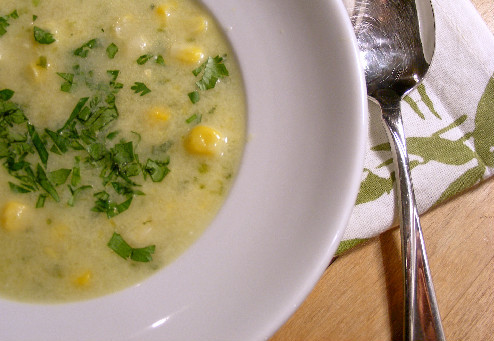
This recipe for sopa de calabacitas y elote, Mexican zucchini corn soup, is simple and perfect for an almost-fall evening.

The recipe is mine but was inspired by a creamy zucchini soup I ate many, many years ago in Cuernavaca, Mexico. At the time, I left my gig in Austin, Texas to study and travel in Mexico. It was a life-changing experience – my first time traveling abroad. I lived part of the time with a local family and lucky for me, in addition to improving my Spanish, I dined on some amazing food.

I credit Josephina, the mujer de the casa (lady of the house), with introducing me to a vast repertoire of Mexican cuisine. She made exquisite meals every day – sometimes made with fancy ingredients and preparations and other times simple. Our main meal of the day was served early afternoon and almost always started with sopa (soup).

One day she prepared a creamy zucchini soup that I immediately adored – simple, light and comforting.

Her version was a pureed zucchini with stock and cream (which could easily be adapted from the recipe below). My version has additional texture from the corn and diced zucchini, plus fresh cilantro.

Enjoy summer’s bounty these last few weeks.

(more…)

Print & If you liked this post, please share:
  • Print
  • email
  • Facebook
  • Twitter
  • StumbleUpon
  • Digg
  • del.icio.us
  • Google Bookmarks

Zucchini: Lebanese Stuffed Zucchini – Kousa Mahshi

Friday, September 3rd, 2010

Life can get hectic. Trying to keep up with the many things pulling us in different directions – family, work, commitments, community . . . Sometimes it feels like the world around us is moving at an unnerving pace. After awhile it takes its toll and I have to find my center.

We all have a few methods that work. For me, yoga or an escape into nature away from cell phones, computers and crowds zens me out. And, of course, cooking is also on this list.

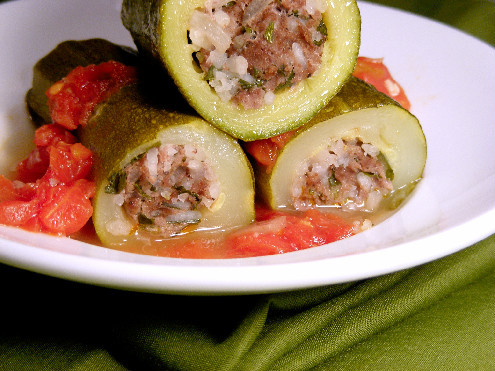
A few days ago I got into my “me time” while cooking these kousa mihshi, Lebanese stuffed zucchini (also called/spelled kousa mihshi, and kussa mihshi).

For the hour that it took to prep ingredients I was “present” – mind and body, enjoying the sensory experience:  coring several zucchini and hearing the corking sound it made with each first cut and tug of the pulp; chopping fragrant fresh herbs: inhaling the warmth from cinnamon and allspice as I measured them out; mashing raw meat with bare hands; and stuffing narrow tubes of zucchini with messy fingers.

This is not a difficult recipe just one that takes a little more time. I could have rushed through the process but why? It was an opportunity to slow down and enjoy the beauty of something I created – from garden to table.

Stuffed vegetables like these kousa mahshi are frequently a Sunday staple but are also served at weddings, parties, and other special gatherings. On such occassions, they are usually prepared communally.

That day, in my kitchen, somehow I felt connected to the generations of Lebanese women who’d made stuffed zucchini for their families and extended families.  This is a meal that is as much about process as the final plate.

Sahtayn! – the Arabic version of “bon appétit,” which means “two healths to you.”

Tidbits on Stuffed Vegetables:

  1. The origin of stuffed vegetables is uncertain, although the Turks and Greeks claim ownership. Originally, they were served in palace kitchens to the wealthy and ruling class.
  2. Traditionally, lamb is used rather than beef to make the meat and rice filling and very traditional recipes for stuffed vegetables like kousa mahshi called for frying them first before stewing.

(more…)

Print & If you liked this post, please share:
  • Print
  • email
  • Facebook
  • Twitter
  • StumbleUpon
  • Digg
  • del.icio.us
  • Google Bookmarks

Zucchini Balsamella – Zucchini Bechamel

Tuesday, August 24th, 2010

My garden runneth over with zucchini. I know. I’m not alone.

About this time of year the excitement in finding one or several zucchini beneath a canopy of green begins to wear thin. If you’re like some of my gardening friends you take the easy way out and give most of them to friends and neighbors.

Yes, it’s nice to share. But, don’t do it because you’re uninspired.  When I first started this blog I posted two excellent recipes for zucchini:

Calabacitas con elote – a Mexican zucchini and corn succotash
Kabak mucveri – Turkish zucchini fritters

And, because I’m a zucchini aficionado, I have a few more recipes coming your way, including this one for zucchini béchamel.

If you’re unfamiliar, not to worry, béchamel is a white sauce made out of a simple roux of butter, flour and milk. It is considered one of the mother sauces of French cuisine. So, when I came upon a recipe for Tortino di Zucchini, a crustless zucchini tart with béchamel sauce in the famed Italian cookbook, The Art of Eating Well by Pelligrino Artusi, I was curious.

Artusi explains that the Italian “balsamella,” is the “. . . equivalent to the béchamel sauce of the French, except theirs is more complicated.” His version omits the French step of cooking the sauce with onion and cloves.

According to many, The Art of Eating Well is the grandfather of Italian cookbooks, treasured by home cooks like the Joy of Cooking is to American audiences – except it dates back more than a century. . . In 1891, Artusi a retired Florentine silk merchant, self-published La scienza in cucina e l’arte di mangiare bene (The Science of Cooking and the Art of Eating Well). It is a collection of recipes from all the different regions of Italy – although it is heavily Tuscan-influenced. The cookbook has been in continuous print since 1894 and was finally translated into English in 1996.

The recipes sometimes have obscure ingredient measurements and scant instructions, which I think adds to its charm. Since most of these recipes were collected from home cooks, it makes sense – a pinch of this or a handful of that.

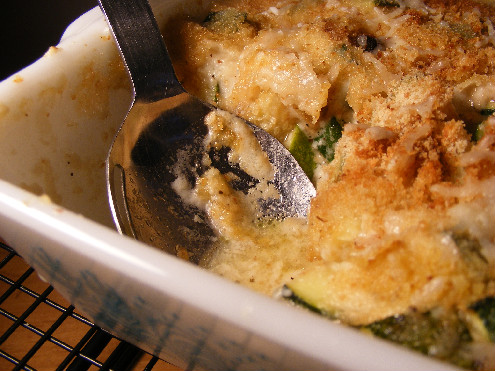
Since the first time I made the zucchini tart last summer, I’ve modified it significantly for the modern cook. And, I think it has more in common with a casserole than a tart. And, technically my version is a Mornay sauce (since it has cheese). It’s not a quick dish to make, but it is worth the effort. To make it easier, make up the béchamel a day or two in advance and reheat.

The final result is semi-crisp zucchini baked in a creamy cheese sauce that hints of nutmeg. It’s a perfect dish to take to a potluck or for those occassions you’re hankering for macaroni and cheese – but, this one is vegetable based.

Buon appetito!

(more…)

Print & If you liked this post, please share:
  • Print
  • email
  • Facebook
  • Twitter
  • StumbleUpon
  • Digg
  • del.icio.us
  • Google Bookmarks

Salsa Wars – Recipes for Roasted Tomato, Beet & Tomatillo Salsas

Sunday, August 8th, 2010

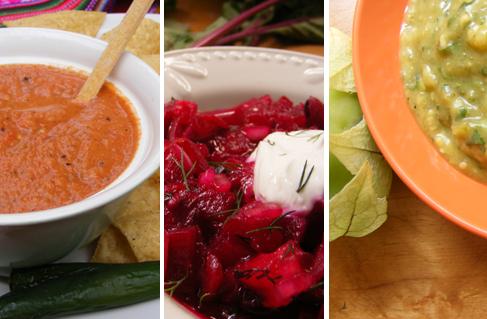
Salsa Wars Finalists

Over the years, I’ve become a bit of a salsa virtuoso. I point to my Mexican roots for precipitating the fondness for chile-based condiments.

Salsa, which means “sauce” in Spanish, originates back to the Aztecs, Mayans and Incas in Mexico and Central America, where sauces were made using tomatoes, chiles and a variety of other ingredients including seeds and berries, depending on availability and location. They encompassed sauces that were cooked and smoothed and those that were chunky and raw.

Growing up, salsa was on the table at every meal, right next to the salt and pepper. Whether it was my dad’s hot roasted green chiles mashed to perfection in the molcajete with garlic or my momma’s impromptu fresh pico de gallo with garden-fresh tomatoes, cilantro and jalapenos – salsa was the choice condiment for everything from tacos to eggs to pizza.

Today, salsa still reigns. Although my definition of it has expanded beyond Mexican and Latin American cuisine.

So, when I got the chance to be a judge at Salsa Wars, Denver Public Library’s salsa recipe contest, I jumped on it. The event was part of DPL’s Street Food series in July, which highlighted food from Peru, Brazil and Mexico.

As a judge, I had the pleasure of tasting the six finalist salsas, and the task of picking my favorites. I was torn . . .

Do I vote for the more traditional Salsa Jefe with roasted chiles and tomatoes or the roasted tomatillo-based Garlic and Lime Green Salsa – both of which I could eat leisurely with chips while I have a cold beer or margarita? Or, do I vote for the Salsa Puttanesca with capers and anchovies that would be great on fish, but I wouldn’t touch with chips? Then, there was that darn Caramelized Onion Salsa that tasted divine but called for an hour plus to caramelize onions?

There was also the lure of ingenuity with the roasted beet Red Square Salsa – tasty but more of a side dish than a salsa? And, a green tomato salsa that appealed to the gardener in me.

Ultimately, I channeled some Iron Chef judiciousness. Along with two other judges – Chef Shellie Kark of Kitchen cue and Jesse Ogas of Encantada Catering, we selected the winners:

1st Place:  Salsa Puttanesca-Salsa Italian Style – by Beth Hewlett

2nd Place:  Salsa Jefe – by Rocio Rowland

3rd Place:  Caramelized Onion Salsa – by Laura Kark

Other Finalists:

Red Square Salsa-Salsa Russian Style – by Beth Hewlett

Garlic and Lime Green Salsa – by Katherine Linder

Coleen’s Amazin Green Tomato Salsa – by Coleen Walsh

Below are recipes and pictures for half of the finalists. I cooked up the three (in bold) and made a few notes in italics. The remaining three recipes can be found on Chef Kark’s blog and her Facebook page.

(more…)

Print & If you liked this post, please share:
  • Print
  • email
  • Facebook
  • Twitter
  • StumbleUpon
  • Digg
  • del.icio.us
  • Google Bookmarks

Purslane: Egg Purslane Tacos – Tacos de Verdolagas y Huevos

Sunday, July 25th, 2010

Tacos de verdolaga purslane egg - ForkFingersChopsticks.com

I’m excited you’re excited for purslane. I feel like I’m on a marketing campaign for the succulent this summer.

I confess, however, the inspiration for featuring this ingredient came from my hubby. He’s been making green smoothies this summer (adding raw kale, spinach, collards and other greens into his berry smoothies for extra nutrients). One day he asked about “purslane” and I reminded him that he’s eaten it in tacos de verdolagas.

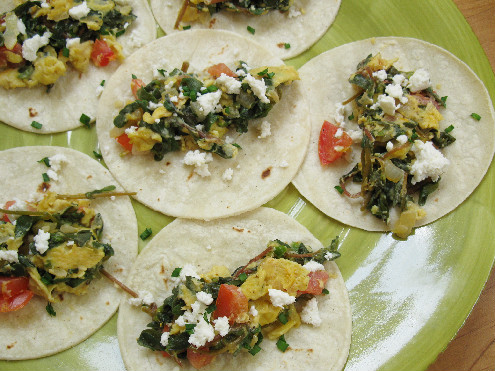
In most Mexican cookbooks, verdolagas/purslane are mentioned in recipes with pork. But, they are also frequently eaten scrambled with eggs. That’s how I remember eating them growing up. When I told my brothers and sisters that I was writing about verdolagas – they waxed nostalgically for those tacos with verdolagas, sautéed onions, chile and scrambled eggs.

For those new to purslane, the cooked version tastes like spinach and loses its tanginess. It’s a nice earthy compliment to eggs.

When you prepare the raw purslane, make sure to use the florets and use only the tender part of the stem. The whole stem is edible, but I find the really thick stems chewy. Substitute purslane in those recipes where you’d usually have sautéed greens like spinach.

This morning we had tacos de verdolagas with a little queso fresco and salsa. They are great for breakfast, lunch, dinner or even a snack.

If any of you are already purslane fans, what’s your favorite way to eat it?

Tidbits on Purslane:

  1. Purslane is loaded with vitamins and minerals but for anyone watching their nitrate intake – as in spinach, don’t over do it.
  2. Its name in Malawi (a southeast African country) translates as “buttocks of the chief’s wife,” referring to the plants rounded leaves and juicy stems.

(more…)

Print & If you liked this post, please share:
  • Print
  • email
  • Facebook
  • Twitter
  • StumbleUpon
  • Digg
  • del.icio.us
  • Google Bookmarks

Purslane: Raw Purslane Weed Salad

Tuesday, July 20th, 2010

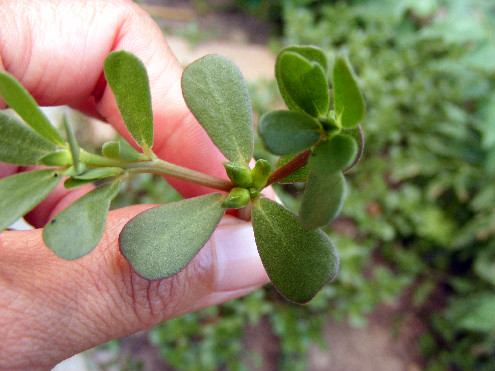
Purslane Verdolaga Weed - ForkFingersChopsticks.com

Call it a weed if you want. Purslane is still good eating.

Every summer growing up, my family planted a backyard garden with tomatoes, calabacitas (zucchini), chiles, cilantro, onions and a few other standards found in most Mexican family gardens. Yet, part of the bounty we enjoyed was something we didn’t plant . . .  weeds.

We would chow down on verdolagas. You might know the weed as “purslane.”

Purslane is a long, red-stemmed succulent with fleshy oval flowers.  It grows all over the world and is eaten in many cultures – in Egypt and Sudan it is used as a medicine and as a vegetable, in France it is served with fish, in Holland it is used in winter salads, and in Mexico, it is frequently eaten with pork.

Despite this, it has a bad rap with most gardeners, who consider it an invasive weed.

Purslane is also known by some unattractive names like pigweed, Little Hogweed and pussley. Not too enticing, eh? After reading this post and its nutritional value (see Tidbits below), I hope you’ll be persuaded to try the little succulent. Know that some folks consider it a superfood.

Purslane has a mild flavor and is slightly lemony. It reminds me of nopales (cactus), without as much mucilage.

This summer as purslane grows in my garden and in the cracks of my sidewalk, I’ve allowed some areas to grow. I prefer to pick it when the stems are about 5 inches in length – the longer the stems, the tangier. On the occasions when it is longer, I discard the thick stems or at least make sure they are cut into small bite size pieces.

The recipe below is for a quick, raw salad I’ve been making this summer. It’s been a hit at several potlucks including my community garden workday. Fellow gardeners were thrilled to find a use for the “edible weed” pervading their gardens.

Hip me up to your favorite uses for purslane.

Tidbits on Purslane:

  1. Purslane has been a go to food during hot weather since before Christ. It is believed to sooth the head and cool the body.
  2. Pigs, apparently, go mad for purslane. I suspect the reason for calling it “pigweed.”
  3. Nutrition:  it’s one of the best vegetable sources of omega-3 fatty acids and some suggest it should be considered a super food. “It is a good source of Thiamin, Niacin, Vitamin B6 and Folate, and a very good source of Vitamin A, Vitamin C, Riboflavin, Calcium, Iron, Magnesium, Phosphorus, Potassium, Copper and Manganese.”

Source:  Hints & Pinches by Eugene Walter, a mini-reference book about herbs and spices; GourmetFood.Suite101.com.

(more…)

Print & If you liked this post, please share:
  • Print
  • email
  • Facebook
  • Twitter
  • StumbleUpon
  • Digg
  • del.icio.us
  • Google Bookmarks

Parsley: Deviled Eggs with Italian Salsa Verde

Tuesday, July 13th, 2010

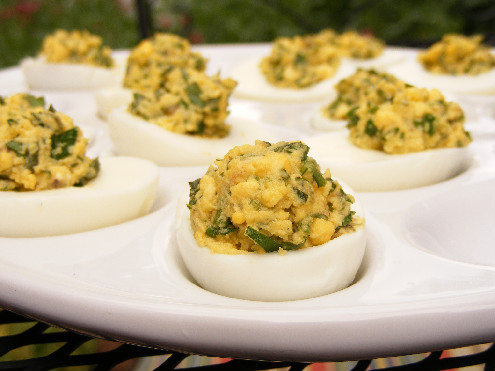
Deviled Eggs Italian Salsa Verde_ForkFingersChopsticks.com

Until last week I was not a deviled egg fan.

I admit to frowning when someone showed up to a party with a plate of ho hum deviled eggs – you know the ones – mashed yolks flavored with too much mayonnaise. Pretty BLAH.

Call me a food snob, but to me, it’s just a notch above bringing cheap hotdogs. (Fear not, I’m gracious and appreciate the thought.)

My attitude changed last week when I made these deviled eggs with Italian salsa verde.

As you know from my last post, Italian green sauce is a fresh herb condiment traditionally paired with boiled eggs – either as an ingredient in the sauce or as a topping for eggs. Thinking about the two, I was inspired to replace the mayo in deviled eggs. The result – deviled eggs that would be a welcome appetizer at a party or summer barbecue.

I was not planning to write this post, but these deviled eggs are so good I had to share. The texture and assertive flavors of the Italian salsa verde make these eggs stand out.

Enjoy!

If you have a particular use for Italian salsa verde, please share. Or, tell us about your favorite deviled eggs.

Tidbits on Deviled Eggs:

  1. Spicy stuffed eggs date back as far as 13th century Andalusia. In a 15th century Italian text, stuffed eggs included raisins, cheese, parsley, marjoram and mint.
  2. In the 18th century, the name “deviled eggs” was termed. “Deviled” is used to connote spicy or fiery, reflecting the seasonings used to flavor. The first recipe for deviled eggs dates back to circa 1786.

Source: FoodTimeline.org.

(more…)

Print & If you liked this post, please share:
  • Print
  • email
  • Facebook
  • Twitter
  • StumbleUpon
  • Digg
  • del.icio.us
  • Google Bookmarks

Parsley: Italian Salsa Verde with Anchovies and Capers

Thursday, July 8th, 2010

Italian Salsa Verde Parsley Anchovies_ForkFingersChopsticks.com

Several things stand out in my memory of the semester I lived in Florence . . .  I remember narrow cobblestone streets. The tranquility of brisk, autumn mornings near the Arno and The Ponte Vecchio, and the quiet occasionally interrupted by buzzing vespas.

I also remember my delight when tasting new Tuscan foods such as Italian salsa verde, green sauce.

In Italy and especially the Tuscan region, Italian salsa verde is paired with steamed vegetables and more traditionally with bollito misto, mixed boiled meats. Made from fresh parsley, anchovies and capers, it certainly awakens the tastebuds.

Salsa verde is a green sauce similar to pesto but uses parsley as the main ingredient. After making it more recently, I would also have to liken it to a fresh herbed version of chimichurri. After all, Italians migrated to Argentina in huge droves in the late 1800s, and the culinary influence is obvious.

As I researched this sauce further, I also found it referenced as “salsa rustica” in the Chianti area.

Most salsa verde recipes include parsley, anchovies, capers, onions, garlic and olive oil. Some also include adding vinegar soaked white bread and/or chopped hard boiled eggs. The addition of either of the latter makes the sauce more substantial and gives it some bulk.

My recipe includes eggs as an optional ingredient.  I make it with and without depending on my mood. My prefernce is still to use the sauce to top boiled eggs rather than include the eggs in the sauce.

Use this green parsley sauce on boiled eggs, steamed green beans, boiled chunks of potatoes, cold meat and as a condiment with canned tuna or to substitute for mayo in deviled eggs. If you don’t care for anchovies, leave them out, it’s still delicious.

Tidbits on Parsley:

  1. Flat leaf or Italian parsley is preferred for many culinary dishes. It has a slightly stronger flavor than curly parsley and holds up better while cooking. If you are making in a white sauce, use the stems rather than the leaves, so that color does not bleed.
  2. According to some alternative medicine remedies, parsley has many healing properties. It can be used in poultices to soothe tired, irritated eyes and also to help heal bruises. The juice can also be used as a natural mosquito repellent and to help relieve the itch and sting of insect bites. Note, however, some people can have allergic side effects.

Sources: The Gale Encyclopedia of Alternative Medicine, The Essential Herb Garden

(more…)

Print & If you liked this post, please share:
  • Print
  • email
  • Facebook
  • Twitter
  • StumbleUpon
  • Digg
  • del.icio.us
  • Google Bookmarks

Parsley: Chimichurri – Argentinean Herb Sauce

Thursday, July 1st, 2010

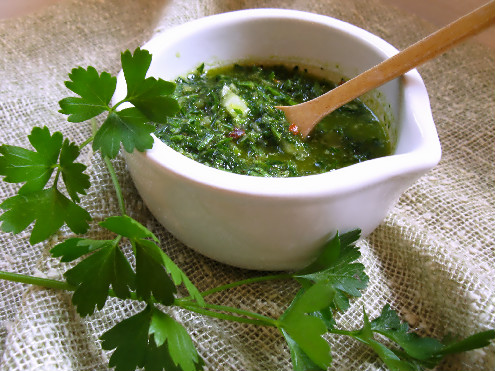
Chimichurri_Parsley Sauce Argentina - ForkFingersChopsticks.com

For people who enjoy cooking or eating, the Fourth of July is as much a holiday related to grilling as it is to fireworks.

Whether you’re throwing down on grilled beef, chicken, fish or tofu this weekend, one sauce you should serve your guests is chimichurri.  It’s easy to make and will earn you some culinary cred.

Chimichurri is a parsley-based sauce originating out of Argentina. There it accompanies grilled meats, chorizo and empanadas. There are countless ways to make chimichurri – ranging from a fresh-herbed bright green sauce (like my version below) to one that is red hued and calls for dried herbs and cooking.

Regardless, essentials for this sauce include parsley, oregano, vinegar, and olive oil. From there, it’s cook’s choice.

To impress your guests further, here are some food history facts:

The origin of chimichurri is a bit sketchy. Credit is given to los gauchos, the cowboys of Argentina’s pampas plains area, famously known for grilling meats and sausages over an open wood fire. Their marinade and salsa of choice was chimichurri, which was likely made of dried parsley and oregano.

Some food etymology also points to non-Argentines as the source:  an Englishman Jimmy Curry, a meat importer who traveled with gauchos in the mid 1800s and an Irishman Jimmy McCurry, who marched with troops for Argentina’s independence in the 19th century. Under either, the locals had difficulty pronouncing their last names and “chimichurri” resulted.

Others, like Argentinean gourmet Miguel Brasco, say the name dates back to when England tried to invade the Spanish colony of Argentina. Allegedly, British prisoners asked for condiment for their food, mixing English, Aboriginal, and Castilian Spanish words – “che-mi-curry” in English meaning “give me curry,” later changed to chimichurri. Another recent theory to surface is by barbecue expert Steven Raichlen, who links it to the Basque word “tximitxurri.” The Basque settled in Argentina in the late 19th and 20th centuries.

Despite the intellectual exercise above, know that this sauce will be a hit.

Chimichurri, especially this fresh-herbed version, is perfect for your grilled food. The fresh herbs, vinegar and lemon juice balance the grease in grilled meat. You can also use it as a salad dressing, marinade, or as my husband enjoys – on corn on the cob.

Let me know how you use chimichurri.

Tidbits on Parsley

  1. Use parsley within a few days of picking or purchasing – before the leaves begin to shrivel or turn a yellowish hue.  After washing thoroughly, store in a glass in the refrigerator. If you want to freeze it for later use, dry thoroughly, chop and freeze.
  2. Parsley is poisonous to most birds but of high nutritional value to humans – rich in vitamin C (three times as much as oranges); it has compounds that clear toxins from the body, which reduce inflammation; it also contains histamine; and contains a compound within called apiol that is valuable for treating kidney ailments.

Sources: Hints & Pinches by Eugene Walter; Encyclopedia of Spices at theepicentre.com

(more…)

Print & If you liked this post, please share:
  • Print
  • email
  • Facebook
  • Twitter
  • StumbleUpon
  • Digg
  • del.icio.us
  • Google Bookmarks